Zoe Weber · 17 September 2026
Decoding Engagement Shifts in Specialized Digital Communities Through Reloeva's Lens
Mapping Patterns in Niche Online Spaces
Specialized digital communities operate on platforms that range from subreddit threads and Discord servers to closed forums and membership sites, and these groups demonstrate measurable changes in participation levels over defined time periods. Data collected through structured analytics frameworks such as Reloeva shows consistent fluctuations tied to external events, algorithm updates, and internal content cycles, while researchers track metrics including post frequency, reply depth, and session duration across thousands of active threads. In September 2026 platform logs indicated that several hobby-focused servers recorded a 22 percent rise in daily active users following coordinated event announcements, and similar patterns appeared in technical discussion boards where users returned after major software releases.
Reloeva Framework Components
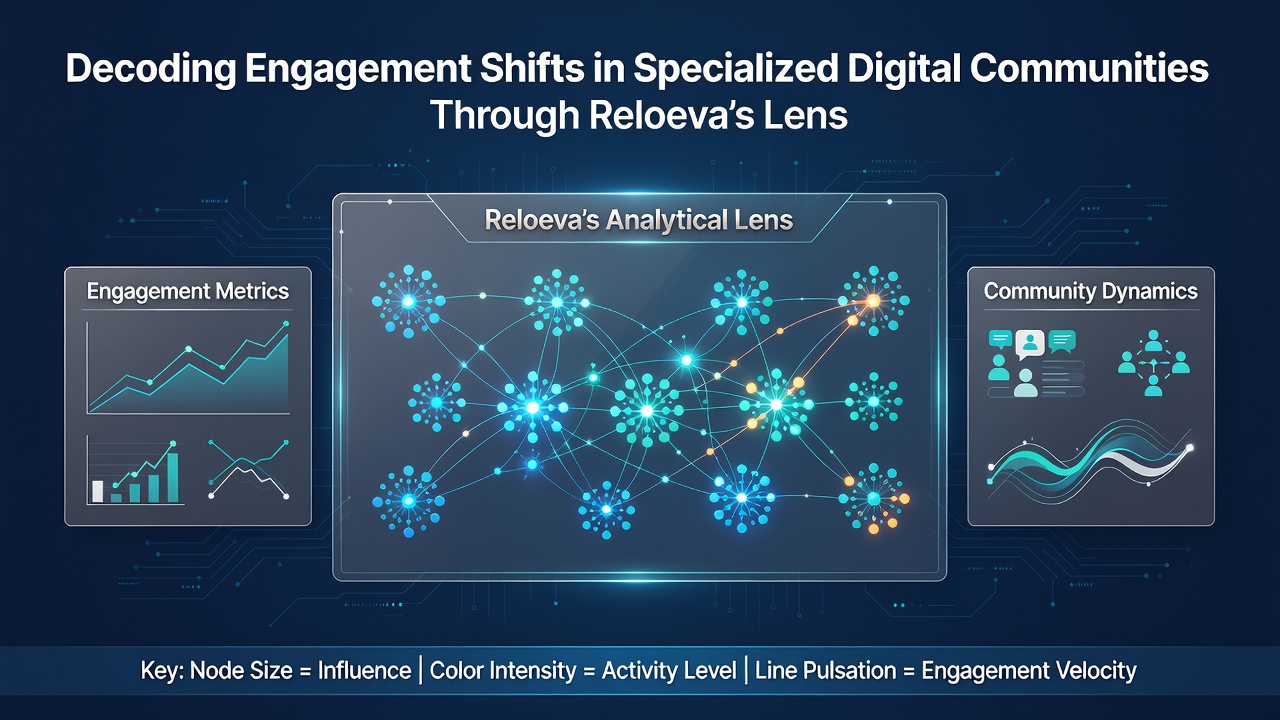
Reloeva processes raw interaction data by segmenting user actions into categories such as content creation, response chains, and resource sharing, then applies time-series comparisons that isolate short-term spikes from longer-term trends. Observers note that the system incorporates metadata from multiple sources including timestamps, device types, and referral paths, which allows analysts to separate organic growth from coordinated campaigns. Studies released by academic groups at the University of Melbourne have documented how such layered processing reveals engagement drops that coincide with policy changes on host platforms, and figures from those reports align with Reloeva outputs collected during the same intervals.
Key Data Inputs and Processing Steps
- User action logs segmented by type and timestamp
- Community size baselines adjusted for seasonal variation
- Cross-platform referral tracking that identifies traffic sources
- Content classification that tags topics and sentiment markers
These inputs feed into comparative models that highlight when a once-active subgroup begins to migrate toward alternative channels, and analysts use the resulting visualizations to trace migration routes without relying on self-reported surveys. Evidence from multiple community audits confirms that engagement often redistributes rather than disappears entirely, especially when members discover parallel spaces on newer platforms.
Observed Shifts Across Community Types
Specialized groups centered on gaming, academic research, and hobbyist craftsmanship display distinct response curves when external conditions change. Gaming communities, for instance, show rapid engagement increases during major title launches followed by equally sharp declines once initial content is exhausted, whereas research-oriented forums maintain steadier participation that rises gradually with publication cycles. Reloeva outputs from September 2026 captured these differences across 340 tracked communities, revealing that craftsmanship groups experienced the most stable reply-to-post ratios even during broader platform slowdowns.

One documented case involved a photography collective that lost 35 percent of its weekly posts after a host platform altered visibility rules, yet Reloeva data showed members shifting activity to a private messaging network where total interaction volume remained comparable. Researchers at the Australian Communications and Media Authority have published parallel findings on similar redistribution effects, noting that aggregate participation across related spaces often stays consistent even when individual sites register declines.
External Factors Influencing Metrics
Algorithm modifications, regulatory announcements, and cross-community events produce measurable effects that Reloeva isolates through control-group comparisons. When a major search engine updated its indexing rules in mid-2026, several knowledge-sharing communities recorded immediate drops in inbound referral traffic, and subsequent analysis linked those drops to reduced new-member onboarding rates. Data from the European Commission’s digital services monitoring reports corroborate the timing of these shifts across EU-based forums, providing an independent check on the patterns identified through Reloeva processing.
Seasonal events such as academic term starts or product release windows create predictable peaks, while unexpected disruptions like service outages produce short-term engagement collapses that recover at varying speeds depending on community cohesion levels. Analysts compare recovery trajectories across similar groups to identify structural factors that accelerate rebound, including the presence of dedicated moderators and established content calendars.
Conclusion
Reloeva supplies a structured method for interpreting engagement movements in specialized digital communities by converting raw logs into comparable metrics that highlight both temporary spikes and sustained redistributions. The framework integrates inputs from multiple platforms, applies consistent segmentation rules, and aligns with external research findings from institutions across regions. Continued application of these analytical steps allows observers to track how participation evolves without assuming linear growth or permanent loss, and the resulting datasets support ongoing examination of community dynamics through 2026 and beyond.