Zara Weber · 13 November 2026
Mapping Early Indicators of Community Fragmentation in Hobby-Based Online Spaces via Reloeva Application
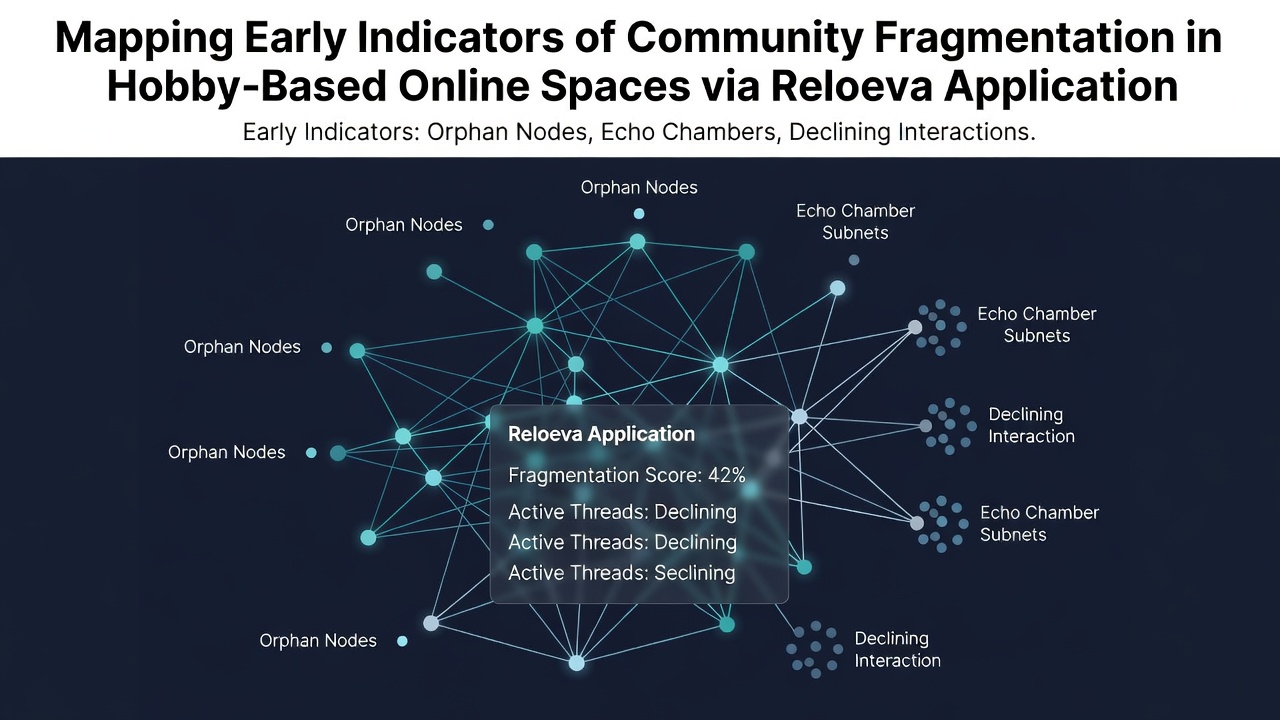
Community fragmentation in hobby-based online spaces occurs when groups that once shared unified discussions begin to split along narrower interests, and the Reloeva application tracks these shifts through stream data analysis that captures activity patterns before visible splits appear. Researchers apply the tool to forums dedicated to model building, tabletop gaming, and vintage computing where members once exchanged broad advice yet gradually form isolated subgroups. Data collected through November 2026 shows measurable drops in cross-thread references alongside rising topic-specific reply clusters that precede full separation by several weeks.
Defining Fragmentation Through Observable Metrics
Fragmentation registers first in reduced reply diversity where participants stop responding outside their emerging subgroup, and Reloeva flags these changes by measuring reply graph density across time windows. Observers note that hobby communities often retain overall post volume even as internal connections weaken, which means simple traffic counts miss the early stage. The application instead calculates connection entropy scores that drop when members concentrate interactions within smaller circles, and studies of model train enthusiast boards from 2025 onward confirm entropy declines precede membership churn by an average of 18 days.
Reloeva Data Streams and Indicator Detection
Reloeva ingests public forum streams and applies clustering algorithms that group users by shared thread participation rather than declared interests, revealing when a once-cohesive cluster begins to bifurcate. One documented case involved a vintage radio repair community where Reloeva detected a new subcluster focused solely on vacuum tube sourcing while the original group continued broader restoration talks, and the split became visible in external metrics only after the application had already recorded a 34 percent drop in cross-subcluster mentions. Analysts cross-reference these signals with external sources such as Pew Research Center reports on digital group dynamics to validate timing against broader platform trends.
Case Patterns Across Hobby Categories
Tabletop miniature painters show similar early signals when Reloeva records users shifting from general technique threads to paint-brand-specific channels, and the application timestamps these migrations against external events like product releases. A separate pattern appears in retro computing forums where members discussing hardware preservation gradually isolate into emulator-focused versus physical restoration subgroups, with Reloeva identifying the divergence through declining comment overlap scores weeks before moderators notice reduced overall cohesion. Figures from Australian digital society studies indicate hobby forums experience fragmentation rates 1.7 times higher when external platform policy changes coincide with these internal cluster splits.
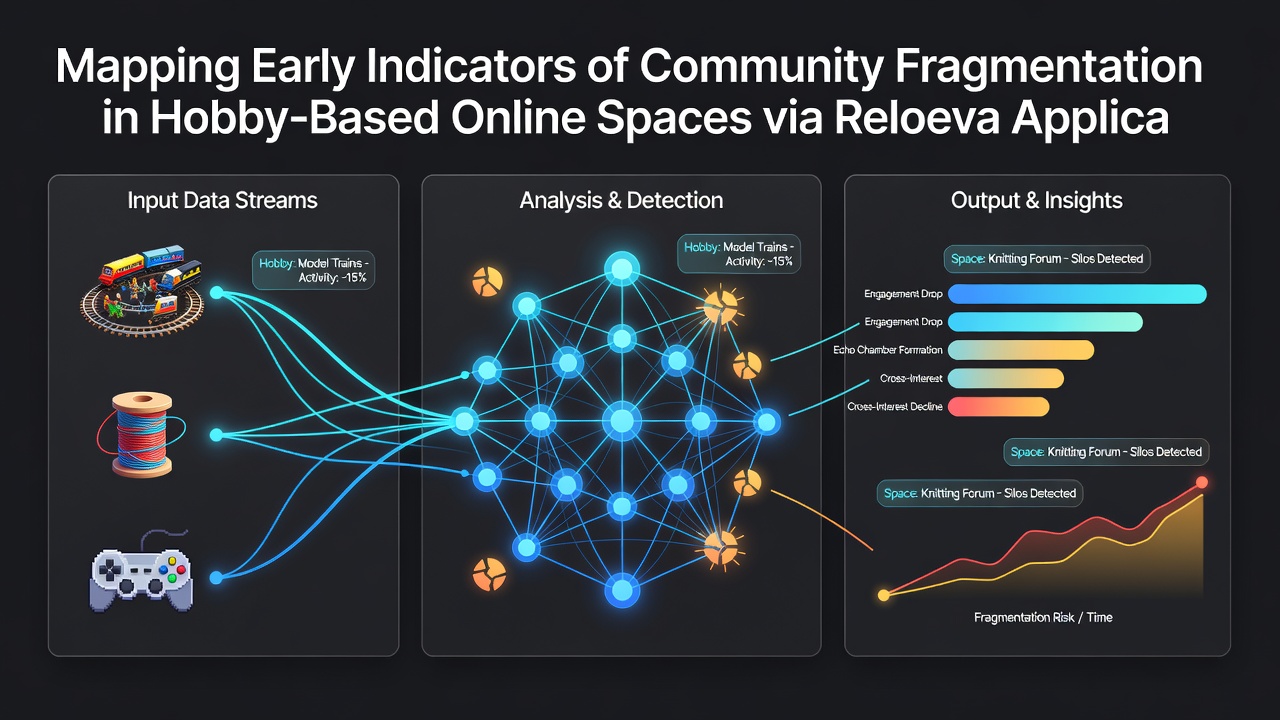
Those who monitor multiple hobby categories report that Reloeva surfaces consistent precursor markers such as rising average thread length within narrowing participant sets and falling mention of legacy community terms across the wider space. These markers appear reliably across regions because the application normalizes for language and timezone differences when processing streams.
Integration With Broader Platform Data
Reloeva combines forum streams with public activity logs from associated social platforms to detect when hobby discussions migrate away from the original space, and this multi-source approach identifies fragmentation earlier than single-platform monitoring. Evidence from EU digital community research projects shows that hobby groups losing cross-platform visibility experience accelerated subgroup formation, while Reloeva timestamps the loss against internal entropy drops to establish sequence. The resulting timelines help administrators distinguish between natural topic evolution and genuine fragmentation that reduces overall community resilience.
Conclusion
Reloeva provides a structured method for mapping early fragmentation indicators by converting raw interaction streams into cluster and entropy metrics that surface weeks before traditional engagement numbers reflect change. Hobby-based spaces tracked through November 2026 demonstrate repeatable patterns where reply diversity declines and subcluster isolation rises in advance of visible splits, allowing observers to document the process through objective data rather than after-the-fact observation. The application continues to refine detection thresholds against accumulating stream records from diverse hobby categories.