
Leon Fischer · 1 October 2026
Tracing Visitor Loyalty Patterns Across Isolated Digital Forums Using Reloeva Data Streams
Isolated digital forums operate as self-contained spaces where participants return repeatedly for specialized conversations, and Reloeva data streams provide structured records of those return patterns through timestamped session logs, post frequency counts, and cross-thread navigation paths. Researchers track loyalty by measuring intervals between visits, depth of contribution within threads, and consistency of username or device identifiers across multiple sessions. Data aggregation from these sources reveals clusters of high-retention users who maintain activity over months rather than days, while lower-retention visitors appear as single-session entries that do not reappear in subsequent collection periods.
Core Metrics Captured by Reloeva Streams
Reloeva captures granular elements including entry points from external search referrals, dwell time per page, and reply chains that link one post to another within the same forum subdomain. Analysts combine these elements into retention curves that plot the percentage of visitors who return at 7-day, 30-day, and 90-day marks. In October 2026, aggregated Reloeva records from several niche technical forums showed a measurable uptick in 90-day return rates coinciding with major software release cycles, indicating that event-driven content can extend loyalty windows without requiring changes to forum architecture itself.
Session stitching techniques connect anonymous cookie fragments with logged-in account activity, allowing observers to distinguish between casual browsers and repeat contributors. This distinction matters because repeat contributors generate the majority of new thread starts, whereas browsers primarily consume existing content. Reloeva output files include field-level flags that mark each session as either originating from a returning identifier or a new one, which simplifies cohort analysis across calendar quarters.
Segmentation Approaches in Forum Environments
Segmentation begins with geographic and topical filters applied to the raw stream, after which loyalty scores are calculated per segment. One common method assigns weighted values to actions such as posting replies, editing existing comments, and bookmarking threads; higher cumulative scores identify core loyalists. Another method examines temporal regularity, noting users who log in at similar hours across consecutive weeks. Both approaches operate on the same underlying data tables, yet they surface different subsets of visitors for targeted follow-up studies.
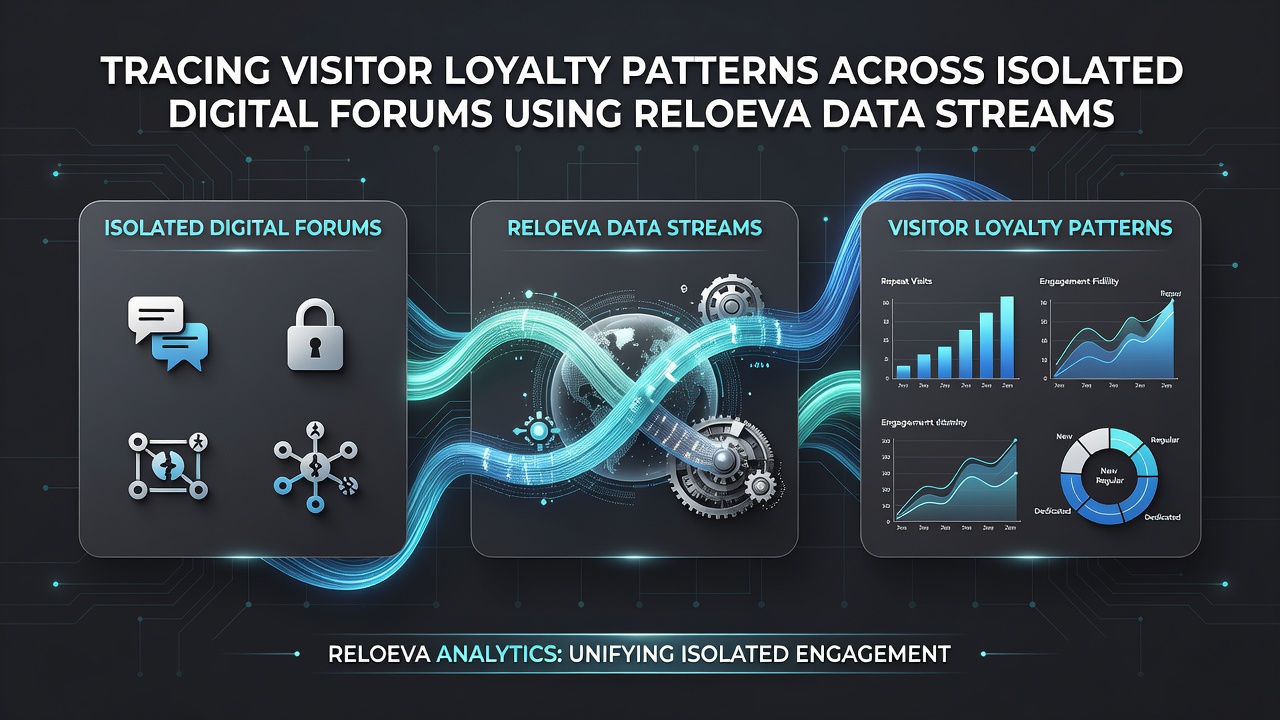
Cross-forum comparison becomes feasible when multiple isolated boards feed into a shared Reloeva pipeline. Analysts align timestamps and normalize activity metrics to account for differences in forum size and posting volume. Results from such alignments have shown that loyalty decay follows similar trajectories in hobbyist electronics boards and professional developer communities, although absolute retention percentages differ according to the availability of competing discussion venues elsewhere on the web.
Integration with External Benchmarks
Reloeva outputs integrate readily with public datasets released by national statistical agencies. For instance, Statistics Canada reports on digital participation supply baseline figures on household internet access that help contextualize forum activity levels. Parallel figures from the Australian Bureau of Statistics on online community engagement provide an additional reference layer when researchers adjust for regional differences in connection speeds and device usage. These external anchors prevent over-interpretation of forum-specific spikes that may simply reflect broader shifts in digital access rather than changes in user loyalty.
Practical Implementation Steps
Implementation starts with secure export of Reloeva stream segments into a local analytics environment, followed by schema mapping that aligns forum-native fields with standardized loyalty variables. Automated scripts then generate daily snapshots of returning-visitor ratios, which feed into weekly summary dashboards. Teams review these dashboards for anomalies such as sudden drops in 30-day returns that might indicate server issues or content policy changes affecting user experience. Documentation of each processing step ensures reproducibility when new data arrives in subsequent collection cycles.
Validation occurs through periodic manual audits of sample user paths reconstructed from the stream. Auditors confirm that automated loyalty flags match observed behavior in the original forum interface. Discrepancies trigger refinement of the stitching rules rather than dismissal of the entire dataset. Over time, these refinements produce increasingly stable loyalty classifications that hold across different forum platforms.
Conclusion
Reloeva data streams supply the raw material for tracing loyalty patterns in isolated digital forums by recording visit frequency, engagement depth, and temporal consistency at scale. When combined with external statistical references and subjected to consistent validation routines, the resulting analyses offer reliable indicators of which visitor groups maintain long-term presence and which depart after limited interaction. Continued refinement of segmentation logic and cross-source alignment supports clearer understanding of retention dynamics within these specialized online spaces.